

The Importance of Fire Detection & Fire Alarm Systems
Fire alarm systems, connected with fire detection and suppression systems, all work together to form a complete fire protection system used in many all kinds of buildings and commercial facilities.
To help understand how fire detection and fire alarm systems work, this blog will explore how a fire detection system works, the different types of fire detectors, and the components of a fire alarm system.
What Is A Fire Detection System?
Fire detection systems are a network of integrated devices that use sensing technologies to detect the presence of a fire during its early stages of development. These detection devices are installed throughout office buildings, factories, storage areas, basements, and other workplace facilities where fires may ignite and spread without being noticed.
Fire detection systems warn occupants of a potential fire outbreak, providing them with enough time to safely evacuate the vicinity. Early fire detection allows precautionary action to be taken before the fire gets a chance to spread and block escape routes.
Detecting fires quickly and accurately also minimises potential damage to property and other critical assets. Fire detection systems allow fires to be suppressed and controlled while the fire is still relatively small.
What Are The Different Types Of Fire Detectors?
Fire detectors use sensing technologies to detect the heat, smoke, radiation, or gas emissions associated with a fire. Fire detection systems often use a combination of the following types of detectors:
Heat Detectors
Heat detectors, or thermal detectors, are safety devices that are designed to respond to any substantial increase in temperature. The heat energy or radiation that causes temperatures to rise normally indicates the presence of a potential fire.
There are two main types of heat detectors – fixed temperature detectors and rate-of-rise detectors.
Fixed temperature detectors trigger an alarm when the temperature in a room increases beyond a preset value (usually 57°C). Rate-of-rise detectors trigger an alarm when temperatures in a room start to rapidly increase (usually at a rate of 6.7 – 8.3°C per minute).
Smoke Detectors
A smoke detector is a safety device that senses smoke particles in the air and alerts people of the threat of a potential fire. There are two main types of smoke detectors – ionisation detectors and photoelectric detectors.
Ionisation detectors make use of two electronically charged plates to create an ionisation chamber between the two plates. When smoke particles enter the detector, it disrupts the electric current flowing through the ionisation chamber which then activates the alarm.
Photoelectric detectors, or optical detectors, make use of a light source that sends a beam of light in a straight line across a chamber. When smoke particles enter the chamber, it scatters the light beam and reflects the light onto a light sensor which then activates the alarm.
Flame Detectors
Flame detectors are designed to identify and respond to the presence of light from flames and fires. These detectors use ultraviolet or infrared sensors to detect radiation emitted by a fire or flame.
Carbon Monoxide Detectors
Carbon Monoxide (CO) is a colourless, odourless gas produced by the incomplete combustion of fuels. Prolonged exposure to the gas is dangerous and can result in carbon monoxide poisoning. Carbon Monoxide detectors are used to indicate the outbreak of a fire by measuring CO levels in the air, and activate an alarm when dangerous levels of CO accumulate in a room.
Fire Alarm System Components
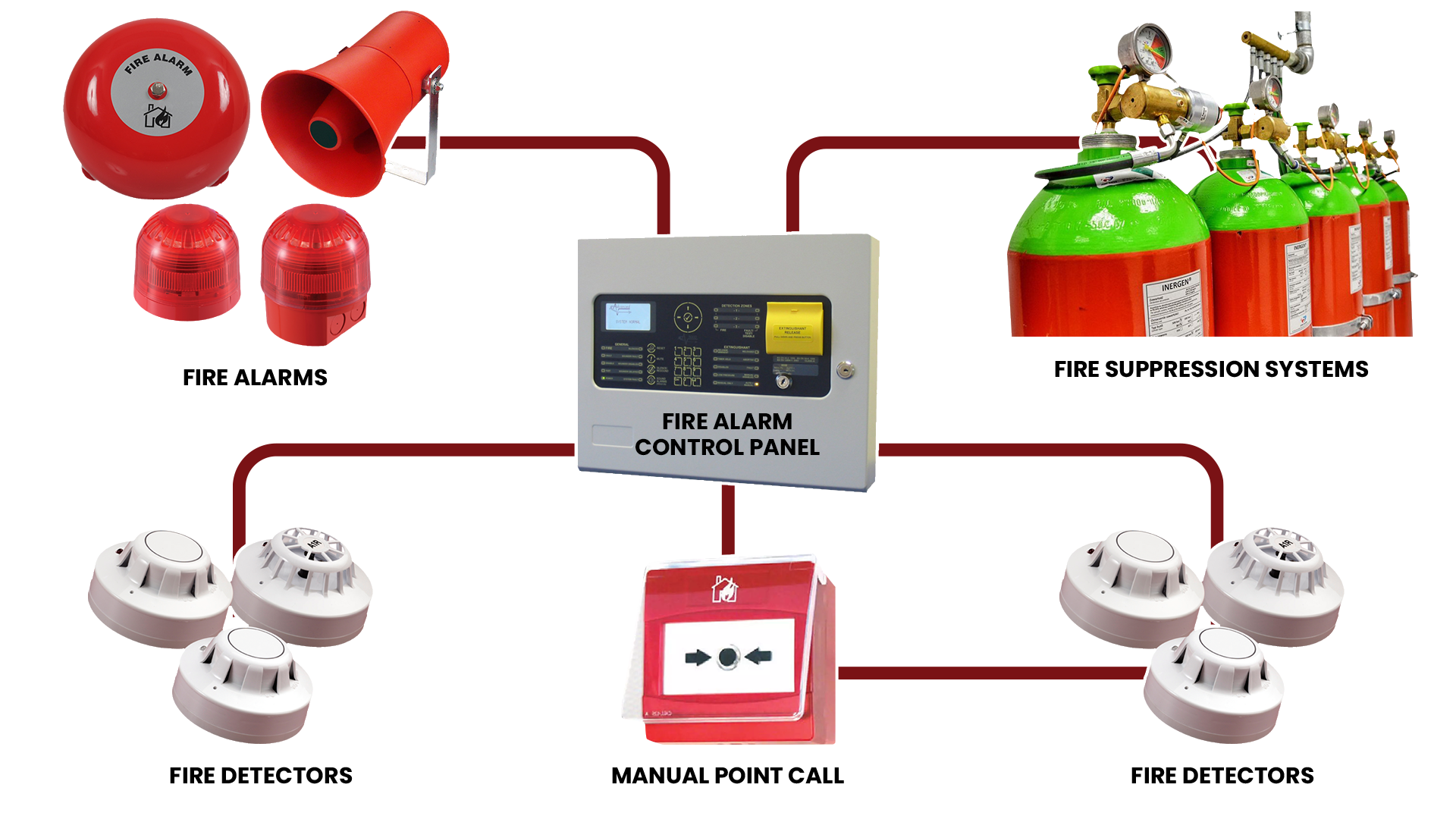
Fire alarm systems consist of many connected devices and components that work together to detect and respond to fires.
Fire Alarm Control Panel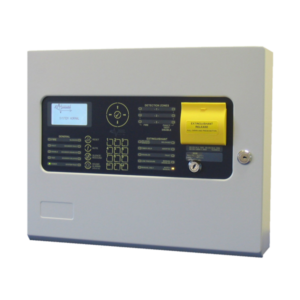
The fire alarm control panel acts as the brains of a fire detection system. It is the central hub that controls and monitors all of the devices in a fire alarm system from one central point.
The control panel functions to monitor a protected area for potential fires, determine the location of a fire, receive information from fire detection devices, activate fire alarms, and supply power to fire detectors and all other linked devices.
Fire Detectors
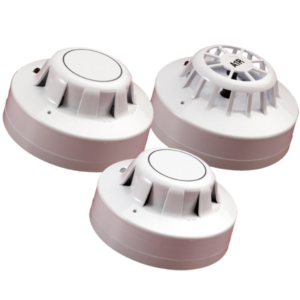
Fire detectors are sensing devices that detect the presence of a fire using smoke, heat, and flame sensors. Once a fire is detected a signal gets sent to an alarm circuit to warn occupants of a potential fire outbreak.
Fire Alarms
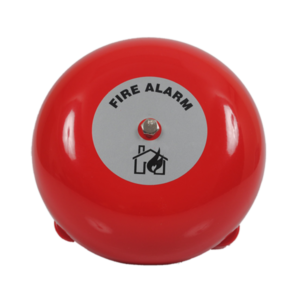
Fire alarm systems use both audio and visual warning signals to alert people when fires have been detected within the vicinity. Visual warning devices are usually found in the form of flashing or rotating light beacons, whereas audio warning devices can include alarm sounders, fire bells, sirens, and horns.
Fire alarms can be activated either manually or automatically. Manually fire alarm systems allow individuals to raise an alarm by pressing a marked element on a manual call point or pulling the lever on a manual pull-down station. Automatic fire alarms require no human involvement and can automatically trigger fire alarms once a fire is detected.
Power Supply
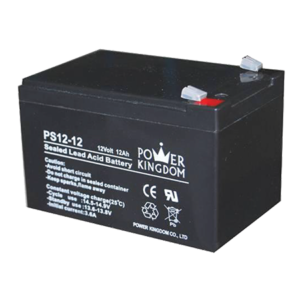
Fire alarm systems are required to have both a primary and a secondary power supply. Back-up power supplies provide an alternative power source in the event of a power outage to keep your alarm system running at all times. Secondary power supplies normally consist of lead-acid batteries or generators that are linked to the control panel.
Fire Suppression System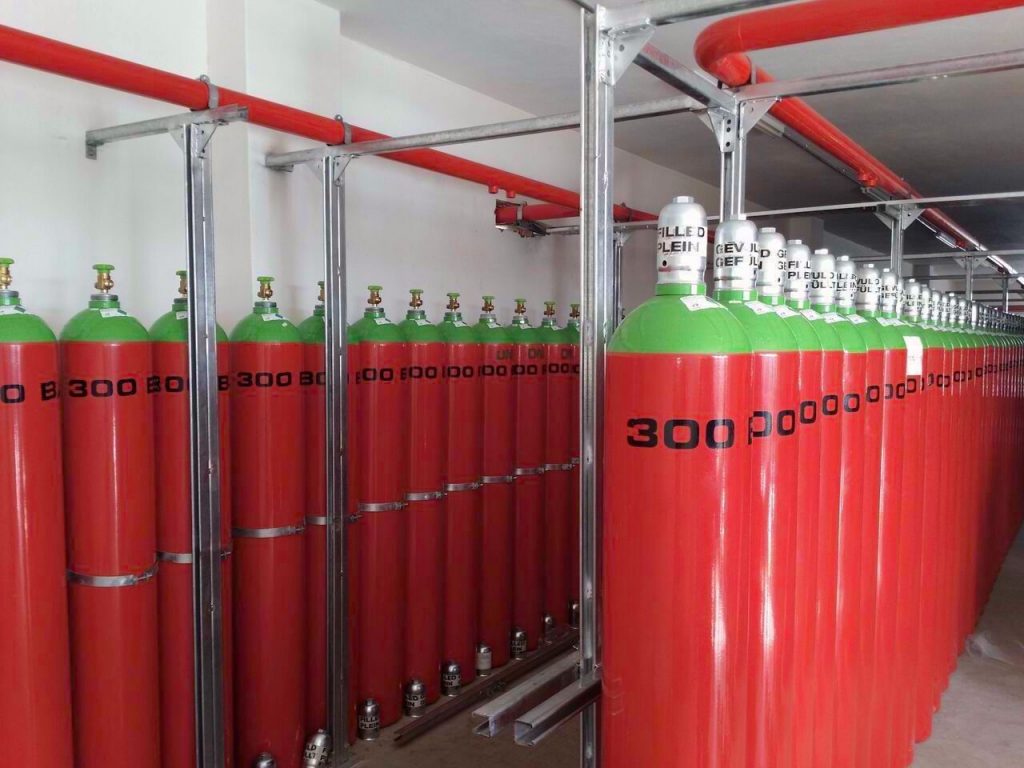
Once a is detected, the control panel will send the instruction to trigger fire alarms and activate the fire suppression system. The fire suppression system will then initiate the steps to discharge an extinguishing agent in targeted zones to suppress and extinguish a fire.
What Happens When A Fire Alarm System Gets Activated?
When fire detectors sense the heat or smoke from a fire, a warning signal gets sent to the fire alarm control panel. Similarly, when manual fire alarms are raised, warning signals are sent to the fire alarm control panel.
The control panel then triggers fire alarms, warning occupants to evacuate the vicinity due to the presence of a potential fire. Fire suppression systems will then respond to control and extinguish any detected fires.
FST Fire Detection & Fire Alarm Systems
Fire and Security Techniques is an authorised supplier of high-tech fire detection systems, fire alarms systems, and fire suppression systems.
Contact us for comprehensive fire protection solutions designed to protect people, minimise property damage, and reduce operational downtime in the event of a fire emergency.
